DRIVING & DISABILITIES
Retrun to Driving
Can you drive after a spinal cord injury?
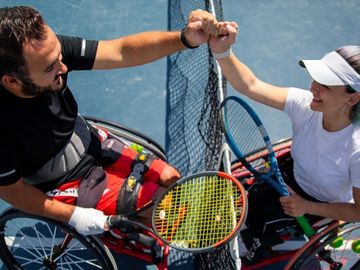 Yes, many people are able to return to driving after a spinal cord injury. In most cases, safe driving can be achieved with the addition of adaptive devices to assist in operating the vehicle’s primary driving controls (gas, brake, and steering) as well as the vehicle’s secondary driving controls (turn signals, windshield wipers, horn, etc.). Modifications to make the vehicle wheelchair accessible may also be required.
To determine if you are a candidate for driving, a driver rehabilitation specialist can provide a comprehensive evaluation. The assessment should include vision/perception, functional ability, reaction time, and behind-the-wheel evaluation. After this assessment, the driver rehabilitation specialist will help you identify what special equipment and accomodations are needed to aid in safely maintaining your mobility independence.
Adaptive Driving Equipment
Possible Mobility Solutions for a Driver with a Spinal Cord Injury
Oftentimes, driving after a spinal cord injury requires vehicle modifications and adaptive equipment. While every driver is unique, the equipment listed below is frequently used by drivers with a spinal cord injury. In addition to these items, there are more products available to help create a safe and comfortable driving experience that is customized for you.
To help you determine what solution best fits your needs, your driver rehabilitation specialist will likely have different variations of demo equipment for you to try. If a particular product is not available for you to demo, please contact a Creative Mobility Group showroom so we can facilitate a demonstration for you with your driver rehabilitation specialist.
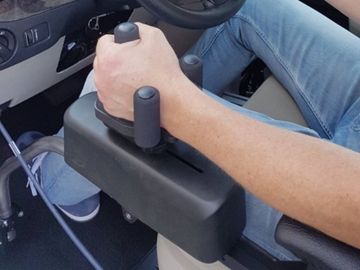 Low Effort Hand Controls
Low effot hand controls allow the driver to accelerate and brake with minimal effort and travel.
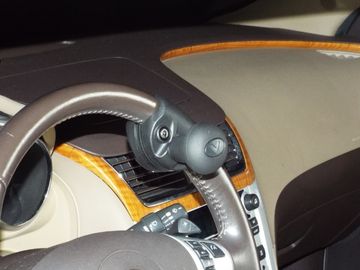 Steering Device
Commonly used with hand controls, a steering device attaches to a vehicle’s steering wheel to provide easier and more comfortable steering.
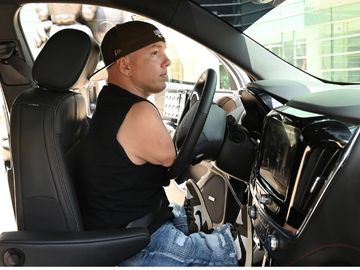 Reduced Effort Steering
In addition to a steering device, a reduced effort steering modification or other steering wheel modifications may be needed.
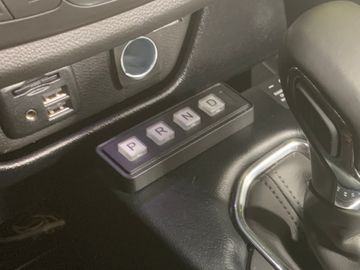 Modified Gear Shifter
An electronic or mechanical gear shift modification can allow the driver to more easily engage the shifter.
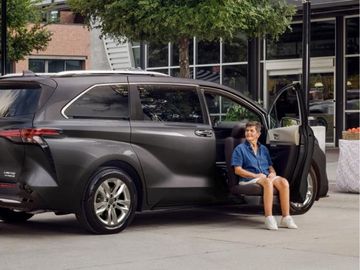 Transfer Aid
A transfer aid, such as BraunAbility® Turny® Evo, can assist with entering and exiting the vehicle independently.
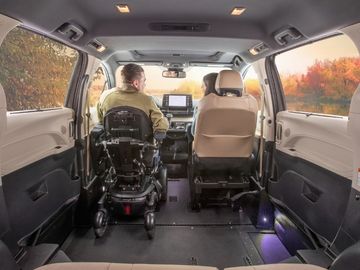 Wheelchair Accessible Van
If the driver will be driving from their wheelchair, a wheelchair accessible vehicle will be needed.
Resources
Additional Resources for Driving After a Spinal Cod Injury
The organizations listed below can provide more resources and information on learning to drive with adaptive equipment after a spinal cord injury. If you’re ready to begin your driver rehabilitation journey, contact The Creative Mobility Group to help you get started!

Association of Driver Rehabilitation Specialists (ADED)
ADED — The Association for Driver Rehabilitation Specialists is a professional organization that represents individuals who specialize in working with individuals with disabilities to evaluate their driving skills and provide rehabilitation services. The mission of the ADED is to promote safe and efficient mobility for individuals with disabilities through education, advocacy, and the advancement of the driver rehabilitation specialist profession.
The organization provides its members with a variety of resources and opportunities, including educational events and workshops, a professional certification program, a peer-reviewed journal, and access to a network of professionals who are knowledgeable in the field of driver rehabilitation. ADED also works with government agencies and other organizations to advance policies and programs that support the needs of individuals with disabilities who require driver rehabilitation services.
Michigan Disabled American Veterans (DAV)
The Michigan Disabled American Veterans (DAV) is a non-profit organization that provides support and advocacy for disabled veterans and their families in the state of Michigan and is dedicated to improving the lives of disabled veterans by ensuring they have access to the benefits and resources they need to thrive.
The Michigan DAV provides a wide range of services to veterans with disabilities, including assistance with filing claims for disability compensation, access to rehabilitation and employment programs, and transportation to medical appointments. The organization also advocates for the rights of disabled veterans at the local, state, and national levels, and works to raise awareness about the challenges faced by these individuals and their families.
One of the primary goals of the Michigan DAV is to ensure that disabled veterans receive the benefits they are entitled to from the Department of Veterans Affairs (VA). To achieve this, the organization provides free assistance with filing claims and appeals for disability compensation, and works closely with VA officials to ensure that disabled veterans receive the care and support they need.
In addition to these services, the Michigan DAV also operates a network of local chapters throughout the state, which provide a range of programs and services tailored to the needs of disabled veterans in their communities. These programs may include peer support, social events, and recreational activities, as well as assistance with housing, transportation, and other needs.
Michigan Paralyzed Veterans of America (MPVA)
The Michigan Paralyzed Veterans of America (MPVA) is a non-profit organization that provides programs and services to support the needs of veterans with spinal cord injuries and disorders, as well as their families, in the state of Michigan.
Some of the services provided by the Michigan PVA include adaptive sports programs, assistive technology resources, peer support and counseling, advocacy for accessible transportation and housing, and assistance with navigating the VA healthcare system. The organization also works to raise public awareness about the needs and capabilities of paralyzed veterans and to promote policies and programs that support their full integration into society.
National Mobility Equipment Dealers Association (NMEDA)
NMEDA stands for the National Mobility Equipment Dealers Association. It is a non-profit trade association that represents businesses in the United States and Canada that sell and service wheelchair accessible vehicles and adaptive mobility equipment.
The mission of NMEDA is to promote safe and reliable wheelchair accessible vehicles and adaptive equipment for people with disabilities. They work to ensure that individuals with disabilities have access to the best mobility solutions and to support their independence and quality of life.
NMEDA members include mobility dealers, manufacturers, and rehabilitation professionals who work together to provide customized solutions for individuals with disabilities. They provide education, training, and certification programs to ensure that their members have the knowledge and skills necessary to provide quality products and services to their customers.
Additionally, NMEDA engages in advocacy efforts to promote policies and regulations that support the needs of individuals with disabilities. They work to improve access to transportation and to ensure that individuals with disabilities have equal opportunities to participate in all aspects of society.
United Spinal Association
The United Spinal Association is a non-profit organization that advocates for people with spinal cord injuries and disorders. The organization was founded in 1946 as the Eastern Paralyzed Veterans Association and has since expanded to include people with all types of spinal cord injuries and disorders, regardless of the cause.
United Spinal provides resources and support to individuals with spinal cord injuries and disorders, including peer support, education, and advocacy. The organization also works to improve accessibility and the quality of life for people with disabilities through legislative and policy initiatives. United Spinal has chapters and support groups throughout the United States and also operates a veterans' program to assist disabled veterans. The Michigan chapters include:
Michigan Chapter of United Spinal Association based in Troy, MI
Southern Michigan Chapter of United Spinal Association based in Detroit, MI